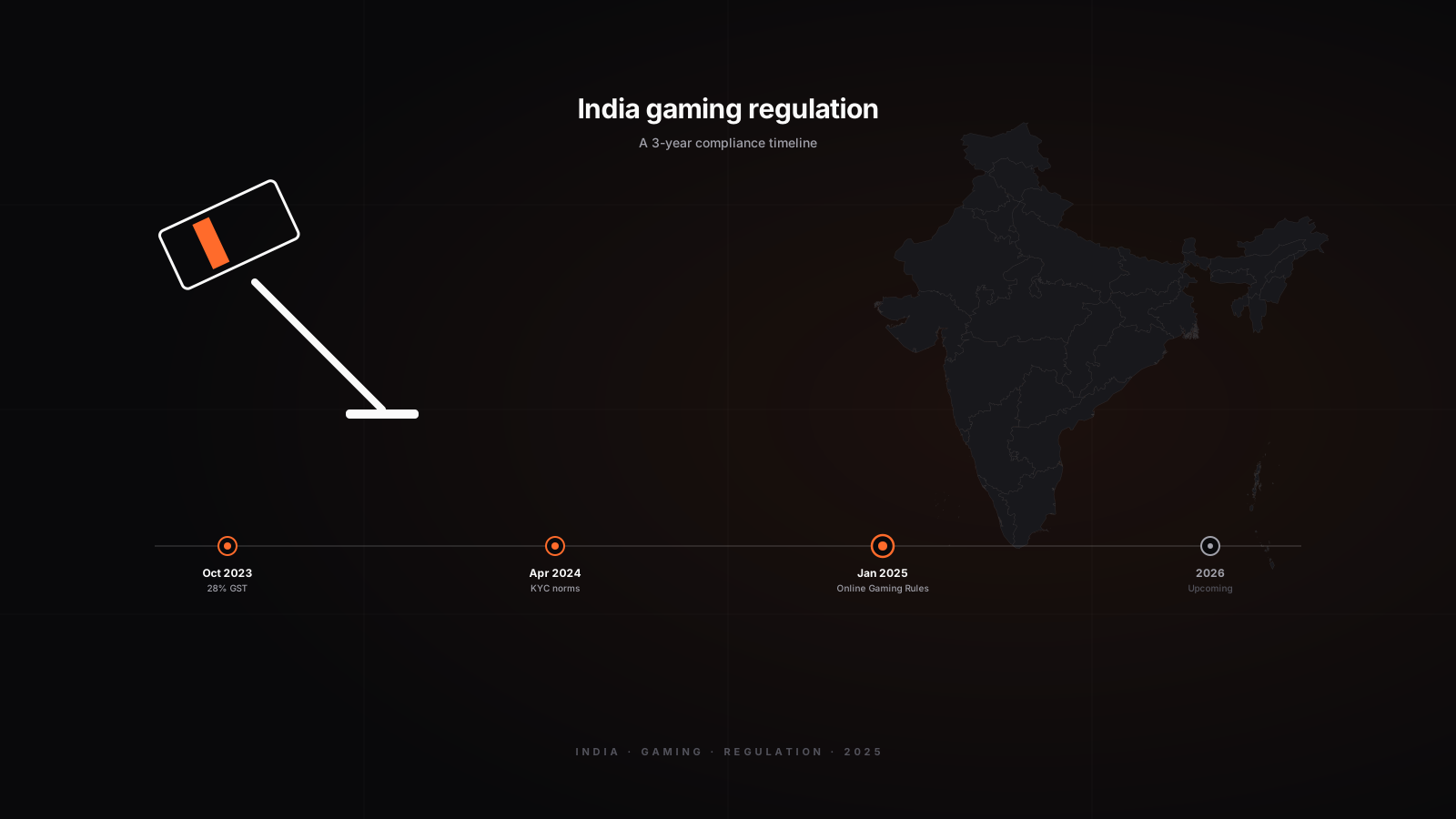
The Timeline: How We Got Here
GST and TDS changes reshape the economics
The Indian government introduced a 28% GST on gross gaming revenue and a 30% TDS on player winnings. These changes significantly increased compliance complexity and squeezed margins for operators and processors alike.
IT Amendment Rules introduce centralised oversight
The Ministry of Electronics and Information Technology (MeitY) introduced the IT (Intermediary Guidelines and Digital Media Ethics Code) Amendment Rules, requiring online gaming platforms to register with a self-regulatory body and meet KYC requirements.
RBI scrutiny intensifies on gaming transactions
The RBI began directly scrutinising UPI transactions to gaming platforms. Banks started applying pressure on payment processors with high gaming transaction volumes. Razorpay, Cashfree, and PhonePe began their exit from the vertical.
Mainstream processor withdrawal
Razorpay, Cashfree, and PhonePe for Business formally exited gaming and high-risk verticals. Dream11, MPL, WinZO, and My11Circle suspended real-money operations during the regulatory transition period.
Compliant operators rebuilding under new framework
Skill-based gaming operators who meet the compliance framework are relaunching. The payment processing gap remains, creating significant opportunity for platforms that secure UPI processing now.
What the Regulation Actually Says About Payments
The 2025 regulatory changes are primarily about platform compliance: KYC, responsible gaming, and self-regulatory body registration. They do not directly prohibit payment processing for compliant operators.
The payment processing gap exists because mainstream processors made a risk management decision, not because payments are legally prohibited. Specifically:
- Skill-based gaming (fantasy sports, rummy, poker) remains legal in most Indian states
- The regulatory framework distinguishes between "games of skill" and "games of chance"; only the latter are categorically prohibited
- Compliant operators with MeitY-registered status can legally process payments
The key distinction: The payment processing problem is not a legal one for compliant operators. It's a risk appetite problem with mainstream processors. Specialist processors like FalconPay remain in the market specifically to serve this gap.
Which Operators Are Affected
The impact has not been uniform:
- International online casinos targeting India: Never had domestic processor access; now have even fewer options. FalconPay is one of the primary remaining solutions.
- Fantasy sports platforms (Dream11 alternatives): Lost mainstream UPI access. Those that meet compliance requirements can now use specialist processors.
- Real-money rummy and card game platforms: Affected in states where these categories are legally clear. Processing available via FalconPay for compliant operators.
- Forex and trading platforms: Collateral damage; not directly impacted by gaming regulation, but affected by the broader high-risk processor withdrawal.
- Crypto exchanges: Separately regulated, but also lost mainstream payment access. FalconPay serves INR on-ramp for compliant exchanges.
The UPI Success Rate Gap
One under-discussed effect of the regulation has been the decline in UPI success rates for operators who cobbled together alternative payment solutions. Operators using non-specialist processors or grey-market payment aggregators report UPI success rates of 60–75%, compared to the 98.5% achievable through FalconPay's direct banking relationships.
At meaningful transaction volumes, this gap is financially significant. At ₹1Cr daily transaction volume, the difference between 75% and 98.5% success is approximately ₹23.5L in additional revenue per day, or roughly ₹85.8Cr annually.
What Compliant Operators Need From a Payment Processor in 2026
Based on the current regulatory environment, Indian gaming operators need a payment processor that:
- Has direct UPI acquiring bank relationships, not aggregator routing that can be cut at any time
- Understands MeitY compliance requirements and can work with operators in the registration process
- Supports INR settlement with audit trails for GST/TDS compliance reporting
- Has a demonstrated track record, not a new entrant that will exit when pressure increases
- Provides fast approvals, because the market is moving quickly and operators cannot afford a 6-week underwriting process
Related Resources
Indian gaming operator looking for a payment gateway that still works?
FalconPay stayed when others left. We process UPI for compliant Indian gaming operators at 98.5% success. Approved in 48 hours.
Apply for India UPI Processing →